Смышленость

Нравится мне это понятие – смышленость. Смышленый человек не только умен, но сообразителен в жизни, может быстро сориентироваться в ситуации и принять правильное решение. Смышленость – стратегическое умение в обыденной жизни. Такой человек не пропадет в любых обстоятельствах.  

Strategic Thinking in Action

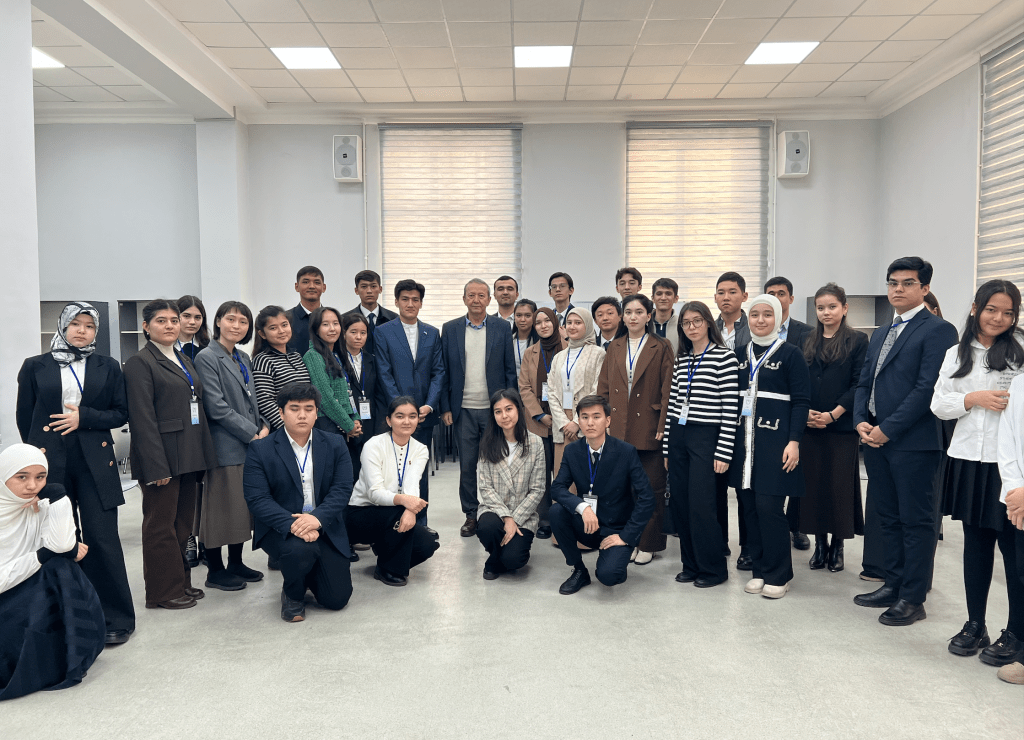
Yesterday, I had the privilege of conducting “Strategic Thinking in Action” workshop for Model UN participants at the University of World Economy and Diplomacy (UWED). The group brought together students from universities across Uzbekistan, along with international participants. I was impressed by the participants’ excellent command of English and their high level of engagement throughout the workshop.
#StrategicThinking #ModelUN #UWED #Leadership #Education #Diplomacy #Uzbekistan #YouthEmpowerment

Silence Is Golden

There lived a teacher known as a wise man, someone who was said to have reached great understanding. He had many disciples, each working hard, hoping for a single word of insight. But the teacher never spoke at all. He simply sat with them in silence, and this only sharpened their expectations.

None of them questioned his method. They thought doing so would show ignorance. They remembered the saying: “Speech is silver, silence is golden,” and many believed that truth reveals itself only in silence.

One day a disciple reached his limit and asked: “Master, may I ask why we are always silent?”

The others stiffened. They expected anger, maybe a rebuke for ingratitude or foolishness.

The teacher said nothing. He only smiled. To the poor disciple it seemed the teacher glanced toward the door, as if hinting he should leave. Flushed, the student stood up and left the school forever.

The rest lowered their eyes. Some wanted to ask something but stayed silent. Others decided never to ask anything at all.

Years passed. The teacher died in old age without uttering a single word. Only after his death did the disciples discover the truth, written in his old notebook: “I keep silence because my tongue was never loyal to the truth.”

Moral: silence is golden only when the tongue is worthy of speech.

First published on my Substack: https://alisherfaizullaev.substack.com/p/silence-is-golden

#Wisdom #Truth #Teaching #Sage #Master

Achievement vs Accomplishment

A concert pianist stands alone in an empty hall at dawn. No audience, no judges, no cameras. Just her and the Steinway, its black surface catching the first threads of light through tall windows.

She plays a familiar Chopin nocturne – one she’s performed hundreds of times. But this morning, something shifts. The music finally sounds like her own voice. Not her teacher’s carefully calibrated interpretation. Not the conservatory’s crystalline ideal. Hers. Raw, imperfect, alive.

She finishes in silence. Her hands rest on the keys. Outside, a bird calls. For the first time in years, she feels complete.

Three years earlier, she won the Van Cliburn Competition. Her photo appeared in The New York Times. The prize launched an international career: concert halls, recording contracts, a teaching position at Juilliard. That was achievement. The world saw it, measured it, celebrated it.

But this morning’s private revelation? This was accomplishment.

The societies we live in have become remarkably sophisticated at measuring achievement. From standardized test scores to job titles, from social media follower counts to awards ceremonies, we track success with algorithmic precision. Those who achieve more are celebrated, profiled, studied. Those who fall behind often struggle with shame, depression, or a particular modern affliction: invisibility.

Achievement has become our dominant language for human worth.

Yet there exists another, quieter dimension of success – one that rarely trends on social media or appears in year-end rankings. No medal commemorates it. No salary increase reflects it. Accomplishment is the internal sense that something meaningful has been completed, that you have grown into a fuller version of yourself, that your effort connected with something true.

The distinction matters because we increasingly confuse one for the other, often at significant psychological cost.

The Achievement Trap

Achievement is inherently comparative. It requires an external standard: a competition won, a promotion earned, a milestone reached that others can verify and applaud. The leaderboard, the rankings, the hierarchy – these are achievement’s natural habitat.

The achievement ideology dominates in many modern societies, particularly in competitive economies. Walk through any elite university and you’ll see it: students optimizing every hour, building resumes that read like corporate portfolios by age twenty. Even artists and writers – people whose work demands thinking outside boxes – find themselves measuring citations, prize nominations, gallery representations.

This isn’t entirely wrong. Achievements open doors. They validate years of effort. They create tangible good in the world. A Nobel Prize in science supports scholarship and advances human knowledge. An Olympic gold medal can inspire millions to pursue excellence. Even reaching ten thousand steps a day marks something worth celebrating.

Achievement has real value.

But achievement is also precarious. It depends on maintaining your position relative to others, on continued external validation. Research in social psychology has long documented how external rewards can undermine intrinsic motivation – a phenomenon known as the overjustification effect. When preschoolers who love drawing are given gold stars for their artwork, many lose interest in drawing when the stars stop coming. The external reward replaces the internal joy.

Scale this up to adult life, and you see the trap. When our sense of worth becomes primarily tethered to achievements, we become vulnerable. What happens when the achievements stop coming? When younger competitors surpass us? When the industry changes and our expertise becomes obsolete? When illness or circumstance interrupts our climb?

I’ve known executives whose entire identities centered on corporate success. Corner offices, strategic decisions, rooms that fell silent when they spoke. Then retirement arrived. No more meetings. No more quarterly targets. No more validation from the marketplace. For some, it felt like free fall. One man told me, with startling honesty: “I looked in the mirror and didn’t recognize who was looking back. Without the title, I didn’t know who I was.”

This isn’t merely an individual problem. A society that overvalues achievement breeds chronic anxiety, status competition, impostor syndrome, and what researchers call “contingent self-worth”- the fragile sense that you’re only as good as your last accomplishment. When external verification becomes the primary measure of success, those who cannot compete – due to illness, circumstance, disability, or simply different values – risk becoming invisible or worse, feeling worthless.

The achievement treadmill has no natural stopping point. There’s always another milestone, another competitor, another metric to optimize. It’s exhausting. And increasingly, people are realizing: even when you win, something feels hollow.

The Substance of Accomplishment

Accomplishment operates on different terrain entirely.

Consider a middle school teacher in Cleveland. She’s worked for fifteen years with students others have written off. No awards. Modest salary. Last week, a former student – now a college sophomore – sent her a letter. He’d been failing her class, angry, shut down. She’d kept showing up for him, kept believing something was there beneath the anger. The letter thanked her. Said she’d changed his life. Said he was studying to become a teacher himself.

She cried reading it. Not because it would advance her career or appear on her performance review. She cried because something real had happened, something that mattered deeply, something she could feel in her bones was true.

That’s accomplishment.

Or consider the writer who spent three years on a novel that never found a publisher. Commercial failure by any measure. But in writing it, she discovered her voice, learned to sustain complex narrative over hundreds of pages, pushed through doubt and paralysis, finished something she’d never believed she could finish. The manuscript sits in a drawer. Yet she knows, with quiet certainty, that those three years changed who she is.

Accomplishment is inwardly anchored. It doesn’t ask, “How do I compare with others?” It asks, “Did I grow? Did I do what mattered? Did I meet the challenge I set for myself, regardless of whether anyone noticed?”

It’s measured not by external standards but by internal integrity and significance. Accomplishment and fulfillment are two sides of the same coin: the sense of self-realization, of being in tune with your nature, of becoming more fully yourself.

But let’s be clear: accomplishment isn’t mere self-satisfaction or complacency. Real accomplishment requires effort, risk, growth. The pianist’s breakthrough came after thousands of hours of practice. The teacher’s impact emerged from years of patient, difficult work. Accomplishment isn’t cheap – it’s just differently valued.

Crucially, accomplishment and achievement aren’t opposites. They often intertwine, support each other, dance together. The pianist’s competition prize provided resources and confidence that eventually allowed for her private breakthrough. The teacher’s modest salary enabled her to keep showing up. Achievement can create conditions for accomplishment. And accomplishment – that deep sense of meaningful work – often fuels the sustained effort that leads to achievement.

The healthiest lives contain both. The danger lies in pursuing only externally validated achievement while neglecting internally grounded accomplishment. Or worse: mistaking one for the other entirely, believing that because you’ve achieved much, you’ve accomplished something meaningful.

Rebalancing Success

Walk into any co-working space in San Francisco or New York, and you’ll hear a particular vocabulary: crushing it, killing it, disrupting industries, changing the world. The language of achievement saturates everything. LinkedIn profiles read like highlight reels. Everyone’s winning all the time.

Except they’re not. Behind the performance, many people feel hollowed out.

How do we rebalance? How do we value both dimensions of success without abandoning standards or embracing complacency?

We might start by recognizing that humans aren’t wired for constant achievement. We’re not machines optimizing toward infinite growth. We’re organic beings with rhythms: effort and rest, challenge and contemplation, expansion and consolidation. Traditional societies understood this. Harvest seasons and fallow periods. Feast days and fast days. The body requires rest; so does the soul.

Modern achievement culture denies these rhythms. It demands perpetual striving, constant optimization, unending productivity. No wonder we’re exhausted.

Rebalancing also requires examining the questions we habitually ask. “What have you achieved?” dominates job interviews, first dates, family gatherings. It’s the default inquiry. What if we also asked: “What have you done that felt meaningful, regardless of recognition?” “What became possible because of your efforts?” “What did you learn about yourself this year?”

These questions redirect attention from comparative status toward personal growth and authentic contribution. They make room for different kinds of success stories.

For parents and educators, this rebalancing is particularly crucial. Children who grow up believing their worth depends entirely on measurable achievements often become adults who cannot appreciate anything that doesn’t come with external validation. They struggle to find joy in process, to value growth for its own sake, to recognize accomplishment when it arrives quietly.

Teaching young people to recognize their own growth – to feel genuinely accomplished when they’ve worked hard at something difficult, regardless of how it measures against others – may be one of the most important gifts we can offer. This doesn’t mean eliminating standards or pretending everything deserves a participation trophy. It means expanding our definition of what counts as success, making room for internal development alongside external metrics.

Leaders, too, can foster environments where internal growth matters as much as external results. Some companies are experimenting with this: creating space for reflection, celebrating learning from failure, measuring impact beyond quarterly earnings. It’s difficult, countercultural work. But necessary.

Perhaps the deepest difference between achievement and accomplishment lies in what happens when external rewards stop coming. And eventually, for all of us, they do.

Careers end. Awards become memories. Even the most impressive achievements fade into history. That gold medal gets stored in a box. The corner office is reassigned. The bestseller list moves on.

But accomplishment – the sense that you’ve lived with integrity, grown into your fullest self, contributed something meaningful – that remains. It becomes part of who you are rather than simply what you’ve done. It’s the difference between having a trophy and being transformed.

Cultivating Accomplishment

So how do we cultivate this quieter success? How do we develop the capacity to recognize accomplishment when achievement culture screams for our attention?

Start with attention itself. Take ten minutes – now, or later today. Journal about a time when you felt deep personal growth or completion, unrelated to external recognition. Maybe you resolved a conflict through honest conversation. Maybe you mastered a small skill – cooking a challenging recipe, fixing something broken – just for the satisfaction of it. Maybe you stayed present with someone in pain when you couldn’t fix their problem.

Write about it. What did you learn about yourself? What made this moment meaningful, even if no one else noticed? How did it change you?

These aren’t idle questions. They’re training wheels for a different way of seeing success. The more you practice recognizing accomplishment, the more visible it becomes. You start noticing it everywhere: in small acts of integrity, in moments of genuine connection, in the quiet persistence that changes nothing externally but everything internally.

You might also experiment with “accomplishment audits.” Once a month, before reviewing achievements (promotions, metrics, milestones), first ask: What did I complete that felt meaningful? What internal growth occurred? What became possible in my relationships, my understanding, my character?

This isn’t navel-gazing. It’s calibration. It’s learning to see what our achievement-obsessed culture renders invisible.

What Remains

When achievement ends, what remains?

That’s not a rhetorical question. It’s the question that reveals what success actually means to you.

Have I become someone I respect? Have I lived in a way that feels true? Have I touched lives in ways that mattered, even if no one kept score? Have I grown into a fuller version of who I might become?

These questions don’t appear on performance reviews. They won’t trend on Twitter. But they might be the most important questions we ever ask.

Achievement builds reputation. Accomplishment builds character.

One is about winning. The other is about becoming.

One depends on the audience. The other depends on the mirror.

One asks, “What did I get?” The other asks, “Who am I?”

We need both. A life without achievement may lack impact, resources, or recognition necessary to do meaningful work in the world. But a life without accomplishment – no matter how many trophies line the shelf – risks feeling empty at its core.

In a culture increasingly obsessed with the first, perhaps it’s the second that most deserves our attention now. Not because achievement doesn’t matter, but because we’ve forgotten there’s another kind of success entirely – one that doesn’t require applause, that can’t be ranked, that exists in the quiet satisfaction of knowing you’ve grown into someone you weren’t before.

The pianist in the empty hall knows both kinds of success. She has her prizes. They opened doors, validated sacrifice, proved something to the world.

But that morning alone with Chopin? That was hers. That was real. That was the kind of success that will remain long after the applause fades.

That’s accomplishment. And it might be the success we need most.

First published on my Substack: https://alisherfaizullaev.substack.com/p/achievement-vs-accomplishment

What’s the Point?

There once lived a village sage who mostly kept silent. The villagers expected revelations from him, but he never hurried. Years passed, the sage grew very old, yet he still made no move to enlighten anyone. By the end of his life, he stopped speaking altogether.

When the moment came and he felt he was leaving this world, many people gathered around him. Even visitors from neighboring villages arrived. Everyone hoped that before dying he might finally say something truly important.

Indeed, right before his final breath, the old man looked around and slightly opened his mouth. The crowd fell silent.

You can read the full story in my Substack: https://alisherfaizullaev.substack.com/p/whats-the-point

The 28-Points Peace Initiative and the SNT Method

The emerging 28-points peace initiative functions as a public version of a Single Negotiating Text (SNT), a mediation technique. One of the most consequential applications of this method took place at Camp David in 1978, when U.S. President Jimmy Carter mediated between Egyptian President Anwar Sadat and Israeli Prime Minister Menachem Begin.

In any SNT process, placing a structured framework on the table in advance means the mediator is not merely facilitating discussion but shaping and largely controlling the negotiation space before the parties even sit down. That is the central strength of the SNT approach.

At Camp David, Carter used a confidential SNT and continually refined it through 23 iterations until agreement became possible. A related logic appeared in the 1982–83 “Walk in the Woods” episode, where U.S. negotiator Paul Nitze and Soviet negotiator Yuli Kvitsinsky stepped outside rigid formal positions on nuclear negotiations to craft an intermediate proposal that neither side could publicly initiate but both could evaluate.

The difference now is the public nature of the text. Once an SNT becomes visible, every actor evaluates it through domestic pressures and strategic narratives. Even so, the architecture matters. Although the distribution of incentives in the text appears uneven, the 28-points framework introduces linkages and options that neither side could realistically table publicly. What follows remains to be seen.

#SNT #negotiation #mediation

Diplomatic Negotiation for Business Leaders

Business and diplomacy may seem to belong to different realms, yet both depend on the same essential craft: the ability to manage complex and high stakes negotiations in uncertainty and with competing interests. In diplomacy, careers and international stability can hinge on a single conversation or understated message. In business, billions of dollars and corporate reputations can turn on the outcome of a deal.

            Having served as ambassador, negotiation scholar, and business trainer and consultant, I have witnessed how diplomatic principles – careful preparation, emotional discipline, social grace, and cultural intelligence – can give business leaders a decisive edge.

            Where many corporate negotiations remain transactional and price-driven, diplomacy operates in fluid environments where subtle signaling, long-term positioning, and managing relationships often matter more than immediate tangible outcome. Leaders who adopt diplomatic skills can navigate these conditions with greater confidence and achieve agreements that endure.

            Below are six diplomatic strategies that business leaders can adapt to strengthen their negotiation mastery.

1. Prepare Beyond the Numbers and Immediate Results

            Seasoned diplomats never approach a negotiation without deep groundwork. They study every stakeholder, including hidden ones, anticipate reactions, align their internal teams, and map out alternative scenarios. Preparation extends far beyond compiling statistics, financial models, and immediate results. It involves uncovering motivations, concealed constraints, long-term thinking, and the informal networks that influence decision making.

            For business leaders, this means asking the questions behind the spreadsheets: What drives each party’s behavior? Who holds quiet influence in the room? What future opportunities might be jeopardized by a short-term concession? A global merger, for example, may hinge less on price than on regulatory attitudes or political sensitivities.

            Diplomatic approach balances urgent objectives with long-term relationships. A negotiator who protects future partnerships, rather than trading them away for a quick win, secures not only today’s deal but tomorrow’s access.

            2. Project Strength with Courtesy

            Power in diplomacy is not merely positional or related to hard power; it is behavioral and may come from soft power. Skilled diplomats maintain calm, respectful presence even when national interests collide. They regulate emotional tone, respond with tact, and build influence through steadiness rather than volume. Skilled diplomats blend outward courtesy with inner resolve. 

            Business leaders face similar high-pressure moments – boardroom showdowns, late-night crisis calls, tense cross-border emergencies and bargaining. In such settings, those who combine firmness with courtesy gain far more leverage than those who dominate the room. Emotional intelligence becomes a strategic asset: reading the atmosphere, paying attention to details, defusing tension, and signaling confidence without aggression.

            Courtesy is not weakness. It is a deliberate form of strength that invites dialogue and keeps the door open for creative solutions when talks reach an impasse.

            3. Communicate with Precision and Intent

            Diplomatic communication is never accidental. Every word, pause, and gesture carries meaning. Timing can be as critical as content; a single well-placed silence can convey resolve more effectively than a paragraph of arguments.

            Business negotiations demand the same discipline. Leaders must craft messages that are clear yet flexible, avoiding unnecessary detail while leaving space for movement. Non-verbal cues – tone, body language, seating arrangements – can reinforce or undermine stated intentions.

            Consider a technology partnership where cultural norms differ sharply: a casual remark that seems harmless in one market might be interpreted as a binding promise in another. Diplomats are masters of communication. A diplomatic approach anticipates these sensitivities, ensuring that communication advances strategy rather than creating costly misunderstandings.

            4. Preserve Dignity and Build Trust

            Lasting agreements require more than handshakes and signatures. They demand that all parties feel respected throughout the process. Diplomatic negotiators go to great lengths to protect the dignity of their counterparts, offering face-saving options, sharing credit, and avoiding public cornering even when disagreements are deep.

            In business, preserving dignity is equally powerful. A supplier who leaves the table feeling humiliated may retaliate later; an investor who feels respected will return for the next round. Trust is built through consistent actions, maintaining confidentiality, and carefully fulfilling promises. Trust building takes time and patience.

            By safeguarding reputation – both their own and that of their counterparts – leaders create the psychological conditions for durable cooperation.

            5. Cultivate Cultural Intelligence and Adaptability

            Diplomats are students of culture. Before entering a negotiation, they learn the history, etiquette, and decision-making styles of their counterparts. This cultural intelligence provides a critical advantage in an interconnected economy where deals often cross borders and time zones.

            For executives, cultural fluency can determine whether a partnership thrives or collapses. A gesture of warmth in one region may be seen as intrusive elsewhere. Decision cycles that are rapid in Silicon Valley may move deliberately in East Asia. Leaders who adapt their style, without abandoning core objectives, reduce friction and build credibility with diverse partners.

            Flexibility is not compromise; rather, it represents strategic alignment. In diplomacy, it combines brilliantly with persistence. By adjusting methods to context while staying anchored to purpose, business negotiators can bridge gaps that purely transactional players cannot.

            6. Practice Strategic Restraint

            Perhaps the most counterintuitive diplomatic lesson is the power of restraint. Knowing when to speak, when to wait, and when to allow silence to work is often more effective than a barrage of arguments.
            Business negotiations frequently reward the same discipline. A well-timed pause can prompt concessions; a delayed response can signal careful consideration rather than weakness. Strategic restraint also prevents public escalation, protects relationships, and keeps attention on long-term outcomes rather than short-term point scoring.
            Quiet effectiveness often beats loud declarations. In diplomacy, it goes hand in hand with determination. The leader who resists the urge to react impulsively preserves room for creative solutions and protects the integrity of the process.

            Leading Like a Diplomat

            Today’s executives face global operations, public scrutiny, complex partnerships, and multicultural teams. Technical expertise and financial acumen are necessary but insufficient. Effective leadership requires the ability to negotiate in environments of uncertainty, shifting alliances, and cultural diversity.

            By integrating these six diplomatic strategies – deep preparation, courteous strength, precise communication, trust building, cultural intelligence, and strategic restraint – business leaders can transform negotiations from zero-sum battles into collaborative problem-solving.

The result is not merely better deals. It is stronger teams, deeper partnerships, and a leadership style capable of navigating the volatile, interconnected world of twenty-first-century commerce.

Originally published on my Substack: https://alisherfaizullaev.substack.com/p/diplomatic-negotiation-for-business

#diplomacy #negotiation #executives #businessleaders

Connection

After much thought, Thornton Zhu came to realize that everything in the world is connected to everything else. Gradually he began to sense those connections – between the falling leaves in London’s Holland Park and a volcanic eruption in Kamchatka, between his wife’s moods and the rising level of the world’s oceans.

One day, seeing in an old magazine a thirty-year-old photograph of a woman in tears, he suddenly understood, though he could not say how, that had she smiled at that very instant, the destructive power of the great Atlantic typhoon twenty years later would have been much weaker.

In his investigations, Zhu had advanced so far that, by studying the pattern of spilled sugar or salt on a tabletop, he could forecast next week’s weather or even the coming grain harvest.

He could only imagine what intricate chain of relationships might stretch between, say, a shaving set in a shop window, the snows of Kilimanjaro, and his great-great-grandfather, who had never shaved and had never been to Africa. Yet time after time, Zhu became convinced that nothing in this world stands apart; everything, somehow, is linked.

Thornton was quite pleased with his discoveries. At times, by listening to birdsong or watching the serve of his favorite tennis player, Pete Sampras, he could tell which London shop was selling cheaper beer. Eventually, a new idea began to trouble him: if two things are connected, then by influencing one, one might affect the other.

But an inner voice warned him not to use this ability. He vaguely sensed that any interference in the flow of events could bring about an endless chain of unforeseen consequences. In ordinary life there was nothing wrong when a person acted naturally, creating or breaking connections through daily deeds. Even the ugliest acts born of life itself were woven into the fabric of the universe, into its vast weave of cause and effect. A sailor sets his sail to the wind that blows, not to the one that has died away or has not yet risen. Yet if he somehow managed to catch a Baltic breeze with a sail on the Black Sea – to construct an artificial link – the whole system would be thrown out of balance.

Once, after dinner, Thornton for some reason drank coffee instead of his usual tea and began softly humming a long-forgotten tune. At that very moment he realized that his beloved nephew would fail his mathematics exam the next day. The boy was finishing school, and his chances of entering Oxford depended on that result. Zhu was deeply troubled but held himself back; he didn’t warn his nephew or suggest postponing the test. Sadly, he was right – the boy did not earn the marks needed for Oxford. Yet Thornton felt no regret. He was even glad that he had managed to keep the genie in the bottle.

That day there was to be a football match between Manchester United and Arsenal. A devoted Man U fan, Zhu had managed to leave work early. On the way home he bought a case of his favorite Boddington’s beer, opened the door of his flat in South London, set the beer down in the hallway, hurriedly threw off his work clothes and shoes, and tossed them in the corner. Then, as usual, he changed into his Manchester United kit. The match was to begin in twenty minutes. He never tried to predict the outcome of games – in fact, he preferred not to – because he liked to savor the match itself.

Grabbing two cans of beer, he headed toward the living room. As he walked, his eye caught the heap of trousers, socks, jacket, and shoes lying on the floor. What he saw struck him suddenly: it dawned on him that the Allied air forces were about to strike Iraq. In just a few minutes, war would begin!

Frozen, Thornton stared at the chaotic pile. What should he do – go watch the long-awaited match as if nothing had happened, or change the arrangement of the heap and thus prevent the war? Zhu hated the Iraqi tyrant, the Bearded Killer, yet as a pacifist he opposed war on principle.

The match was about to start; there was no time to lose. Gathering himself, Thornton took a short run-up and, like an expert footballer, kicked the trousers across the room. Yes, he had broken his rule and interfered with the course of events. But this was a special case, and Zhu felt with relief that the threat of war had passed.

Content, he turned on the television, settled comfortably in his armchair, took a sip of beer, and waited. But just before kick-off, the broadcast from the stadium was interrupted by breaking news. The excited announcer reported that only minutes earlier, Allied forces had launched a missile strike on the Lesser Barbarian Archipelago. The newsreader expressed confusion: why had the Allies, after so long preparing for war with Iraq, suddenly attacked a cluster of god-forsaken islands inhabited mostly by peaceful shepherds?

Zhu turned pale. He ran into the hall, still holding his half-empty can of beer, and stared in despair at his trousers sprawled limply between the telephone and the crate of beer. In his mind’s eye he clearly saw the Allied missiles falling on the green pastures of the archipelago. Then something caught his attention: one trouser leg was bent awkwardly at the knee. My God – one of the missiles had veered off course and was heading for America!

He had to act immediately to prevent disaster. But then another thought came: any attempt to intervene might unleash new horrors. What should he do? No – he must save innocent lives! Thornton hurled the beer can into the trouser leg and, instantly calm, ran back to the television. He knew the missile would not strike America now, and he was glad. But he preferred not to think about where it might land instead. Zhu understood that the more he interfered with events, the more unpredictable they became.

The explosion came so suddenly that Thornton never had time to appreciate the elegant football play that was about to end in a magnificent goal.

#shortstory, #philosophy, #metaphysics, #irony

The Arts of Negotiation and Fencing

Fencing and negotiation may seem worlds apart – one takes place on a piste with blades, the other across a table with words. Yet both belong to the same ancient art: the art of strategic interaction.

As a former fencing athlete – Master of Sports and member of Uzbekistan’s junior team (foil) – and ex-ambassador, I have long felt how movement, timing, and awareness shape not only competition but also negotiation and diplomacy. In both fencing and negotiation, every move matters. You face an opponent who is, paradoxically, also your partner in creating the outcome. You win not by overpowering, but by reading, anticipating, and harmonizing with the rhythm of the encounter. And in diplomacy and negotiation, like in fencing, real emotions can be hidden behind the masks. I use negotiation for the universal craft and diplomacy for its grandest stage –statecraft – but the blade and the mask work the same in both.

In fencing the mask is literal – steel mesh that turns the face into a blank oval, forcing both combatants to read shoulders, hips, the tremor of a wrist. Yet it is never neutral: it magnifies micro-signals while shielding the eyes that might betray fear or triumph. The diplomat’s mask is subtler – posture, tone, the calibrated half-smile – yet it serves the same double purpose. It protects vulnerability and projects control. Skilled practitioners learn to inhabit the mask without letting it ossify. A fencer who freezes behind the grille is stabbed; a negotiator who mistakes his persona for his person concedes the agenda. The master, therefore, treats the mask as a mirror held at arm’s length: it reflects the opponent’s expectations back at them, distorted just enough to create openings. When to lower it – briefly, strategically – becomes the final feint. A flash of genuine frustration can lure an overconfident lunge; a flicker of empathy can coax the concession neither side thought possible. The mask, then, is less disguise than instrument: played well, it reveals more than it conceals.

Every fencer knows that victory depends less on strength and more on timing, distance, and clarity of intention. One has to read or assess the situation as a whole. The same is true for negotiators. The best negotiators, like skilled fencers, sense when to advance, when to pause, and when to let the other side make their move first. They know how to disguise intent without losing authenticity and how to stay calm amid uncertainty.

The art of anticipation lies at the heart of both disciplines. In fencing, you learn to read your opponent’s body before they move – a subtle shift in weight, a fraction of tension, the rhythm of breathing. You do not simply react; you position yourself where their next move will leave them vulnerable. You need to think several steps ahead.

In negotiation and diplomacy, the same principle applies. The skilled diplomat reads not just words but silences – the pauses that reveal doubt, the emphases that betray priority. Anticipation is not prediction; it is awareness so sharp that you move with events, not behind them. You create space for outcomes before others realize they are possible.

In game theory, Thomas Schelling described a “strategic move” as an action designed to shape another player’s expectations and choices. Both fencing and negotiation embody this principle. The expert fencer and the seasoned diplomat know that a move is never just a movement – it is a message. It signals, provokes, and reshapes the situation. The most decisive move often appears indirect: a feint, a pause, an invitation that makes the other commit first.

Both disciplines are simultaneous games – players act concurrently, ahead of, or in reaction to one another. This makes the game harder, yes, but infinitely richer in strategic possibility. In fencing, you cannot wait for your opponent to fully extend before responding – but you can invite the extension with a half-step back, a flicker of the blade. Negotiation follows the same logic: you don’t counter an offer you haven’t heard, but you can shape the silence – a pause, a raised eyebrow, a question left hanging – until the other side feels compelled to speak first.

In both games – whether with swords or with mental strategies – the mastery lies not in aggression but in presence, timing, and design. Each move expresses intention, communicates possibility, and defines the space of mutual understanding. However, the move can also be deceptive, and the best fencers and negotiators can distinguish the real one from the deceptive.

One might argue that many sports involve strategy, reading opponents, and tactical thinking. Yet fencing occupies a unique position. Unlike tennis, where the court separates and faces are visible, fencing occurs at conversational distance – close enough to read breath and tremor, masked enough to require interpretive skill. Unlike sports where reaction time eclipses strategic thought, fencing’s tempo allows for the pregnant pause, the deliberate invitation, the calibrated feint. And unlike games where implements mediate contact, the blade is direct extension of intention, a communicative instrument that signals as it threatens. Fencing, like diplomacy, emerged from the same crucible: the aristocratic culture of honor, where negotiations failed and swords spoke. They are not merely analogous – they are cousins.

Diplomats sometimes say that negotiations are “fencing with words.” Fencing, at its best, is a dialogue of minds expressed through movement. Both arts remind us that the finest victories are those achieved not only with strategy, precision, and timing, but also with grace. And perhaps this is the deepest parallel: in both fencing and negotiation, the bout ends but the relationship continues. The opponent you face today may be your partner tomorrow. The fencer who scores with brutal efficiency may win the point but lose the respect that shapes future matches. The diplomat who extracts maximum advantage may secure the agreement but poison the well for what comes next. True mastery, then, lies not merely in winning but in winning in a way that preserves the possibility of future engagement – fighting as if you might one day need to fight beside your opponent, negotiating as if today’s adversary might become tomorrow’s ally. This is why grace matters: it is not ornament but insurance, not weakness but wisdom. The mask comes off, the blades are lowered, and what remains is the memory of how you moved – and whether, when next you meet, the other side will trust you enough to engage again.

#fencing #foil #diplomacy #negotiation #strategy #move

Books

Alisher Faizullaev is the author of academic, professional, and literary works published in English, Russian, and Uzbek. His books explore diplomacy, negotiation, psychology, leadership, and the art of human interaction.

Books in English

  • Faizullaev, Alisher (2022). Diplomacy for Professionals and Everyone. Leiden and Boston: Brill.
  • Faizullaev, Alisher (2018). Symbolic Insult in Diplomacy: A Subtle Game of Diplomatic Slap. Leiden and Boston: Brill.
  • Selections from the author’s earlier work Motivational Self-Regulation of Personality were translated into English and published by Taylor & Francis in 2020 in the Journal of Russian & East European Psychology. https://doi.org/10.1080/10610405.2020.1852849

Books in Russian and Uzbek

  • Faizullaev, Alisher (2015). International Negotiation: A Practical Guide for Diplomats. Tashkent: Jahon.
  • Faizullaev, Alisher (2011). As Power to Power: Politics of Interpersonal Relations. Moscow: Smysl.
  • Faizullaev, Alisher (2007). Diplomatic Negotiations: Textbook. Tashkent: University of World Economy and Diplomacy Press.
  • Faizullaev, Alisher (1995). Human Being, Politics, Management. Tashkent: Uzbekistan Publishing House.
  • Faizullaev, Alisher (1987). Motivational Self-Regulation of Personality. Tashkent: Publishing House of the Academy of Sciences of Uzbekistan.

Literary Works in Russian

Published under the pen name Alisher Faiz.

  • Faiz, Alisher (2006). Krugovorot (Circulation). Tashkent: Sharq Publishing House.
  • Faiz, Alisher (2004). Tabula Rasa. Tashkent: Sharq Publishing House.

Edited Books

  • Faizullaev, Alisher and Roy Allison (eds.) (2005). Regional Conflict Prevention/Resolution and Promoting Stability in Central Asia and Afghanistan. Tashkent and London: University of World Economy and Diplomacy (UWED) and Chatham House [in English and Russian].
  • Faizullaev, Alisher (ed.) (2004). Problems of Uzbekistan’s National Security and Conditions for Sustainable Development. Tashkent: UWED [in English, Russian, and Uzbek].

Courses

Professor Alisher Faizullaev has developed and teaches the following university courses. They integrate theory and practice, emphasizing strategic thinking, negotiation, communication, and diplomacy as dynamic, human-centered, and interactive disciplines.

1. Diplomacy & Negotiation

Course Description

This course offers a systematic introduction to diplomacy and negotiation as interconnected practices shaping international relations. Students explore conceptual foundations and develop practical skills through lectures, discussions, simulations, and analytical case work. The course emphasizes both strategic reasoning and interpersonal dynamics, with particular attention to game theory as a tool for understanding negotiation behavior and outcomes.

Learning Outcomes

Students will:
• Explain how diplomacy and negotiation influence international politics and conflict resolution.
• Apply analytical frameworks (game theory, signaling, practice theory) to real-world cases.
• Demonstrate negotiation, communication, and persuasion skills in simulations.
• Design diplomatic strategies that balance interests, power, relationships, and ethics.

2. Interactive Communication

Course Description

This course develops competence in four fundamental modes of human interaction: conversation, negotiation, rhetoric, and debate. Students learn how people think, speak, and act in cooperative and competitive situations, and how communication shapes relationships and decision-making. The course integrates conceptual models with experiential learning, drawing on discussions, case studies, role plays, and simulations, while paying attention to verbal, nonverbal, and digital communication.

Learning Outcomes

Students will:
• Demonstrate proficiency in conversation, negotiation, rhetoric, and debate across contexts.
• Use strategic and interpersonal communication techniques to build trust and influence.
• Deliver structured and persuasive speeches and engage in reasoned, evidence-based debate.
• Apply communication skills in intercultural, professional, and digital environments.

3. Strategic Thinking and Interaction

Course Description

This course examines the principles and practices of strategic thinking in diplomacy, business, politics, and social life. Students learn to analyze complex situations, anticipate the behavior of others, and develop strategies that respond to uncertainty and interactional dynamics. The curriculum integrates game theory, negotiation analysis, and strategic communication with case studies and simulations.

Learning Outcomes

Students will:
• Apply strategic and game-theoretic models to international and organizational cases.
• Evaluate strategic choices in both cooperative and competitive interactions.
• Incorporate ethical, cultural, and psychological factors into strategic decision-making.
• Demonstrate strategic communication and negotiation skills through exercises and simulations.

4. Diplomacy in the Modern World

Course Description

This course offers an overview of contemporary diplomacy, examining its evolution, institutions, and practices from bilateral to multilateral and digital contexts. Students analyze current international events and develop practical skills through lectures, discussions, and simulations. The course highlights how diplomacy operates within political, cultural, and technological transformations.

Learning Outcomes

Students will:
• Explain the evolution, institutions, and methods of modern diplomacy.
• Compare state and non-state diplomacy, including bilateral, multilateral, and digital forms.
• Demonstrate skills for organizing conference diplomacy and participating in multilateral negotiations.
• Analyze the ethical, political, and cultural dimensions of diplomatic practice today.