Character Attack and Reputation Management in Diplomacy

A new conversation on my Diplomatic Nexus channel.

Together with Professor Eric Shiraev, we examine character attack as a strategic tool in diplomacy and the problem of reputation management under political pressure.

Character attack is not simply a personal insult or rhetorical excess. It is a method of influence that can delegitimize actors, reshape negotiations, and alter diplomatic outcomes. Despite its growing relevance, this phenomenon remains surprisingly underexplored in mainstream diplomatic studies.

Professor Eric Shiraev (George Mason University) is a leading scholar on character assassination and reputation dynamics, and the author of more than thirty books on political psychology, leadership, and influence.

The conversation is relevant for diplomats, analysts, and anyone interested in how power operates beyond formal negotiations.

‪@DiplomaticNexus‬

Subscribe and like.

#diplomacy #characterassassination #reputation

The Train to Kyoto

It happened in Japan, at one of Tokyo’s train stations. My friend and I were waiting for the train to Kyoto. A woman’s voice announced arrivals and departures, but I understood nothing in Japanese. I noticed my friend kept glancing at his watch. I asked:

“Is something wrong?”

“No.”

But it seemed to me he was hiding something.

“Is the train late?” I continued asking.

“Oh, if only!” he answered, looking at his watch again.

“What do you mean?” I was surprised. “You don’t want it to be late, do you?”

“No, quite the opposite.”

I didn’t understand anything.

“You see, if the train is late, the company has to pay us compensation. It would be nice to earn a little extra.”

“And that’s why you keep looking at your watch?”

“Yes, judging by the announcement, there’s a chance the train might be delayed. So I got my hopes up a little… But to tell the truth, I’ve never had a case in my life where a train was late.”

“Let me also pray mentally for it to be late,” I said and closed my eyes.

While we stood on the platform praying, the train safely (and, to our regret, on time) arrived. My friend looked at me guiltily and shrugged. With a deep sigh, we boarded the train and departed for Kyoto. But then a secret hope arose in me.

Maybe we’d be delayed en route and arrive late to the ancient capital of Japan? Alas, this hope didn’t come true either. Moreover, our return train also arrived in Tokyo on schedule.

Well, what can you do? There are times when even prayers don’t help.

First published on my Substack: https://alisherfaizullaev.substack.com/p/the-train-to-kyoto

#Train #Japan #Delay #Pray

The Hunger Volunteer

The Hunger Volunteer

In the early nineties, I spent two weeks at an acquaintance’s home in New York. She was a devout and fairly well-off woman of pre-retirement age who worked as a management consultant at a large company. She told me that every Sunday she and her friends did charity work and invited me to join them. I gladly agreed.

Getting up early and drinking, as was customary in that house, a glass of orange juice instead of breakfast, we left the house at seven. We arrived at some building in the New York suburbs. Around eight in the morning, about twelve of us volunteers had gathered. Judging by their appearance and manners, these were people of means. Voluntary assistance to those in need is considered a noble cause and is fairly widespread among Americans with middle and higher incomes.

Our task was to feed the homeless, unemployed, and all those in need with a free Sunday lunch. We started by cleaning a room that looked like a gym. Then tables and chairs, kitchen and dining supplies, and food were brought in. We worked hard, without breaks, without unnecessary conversation. Everyone was united by a sense of high mission. My only problem was that I was hungry.

By around noon, the preparations were complete. People for whom the food was intended began lining up outside the building. Many of them were dressed in rags and looked, to put it mildly, not great. Apparently, these people came here every Sunday.

Finally, at twelve-thirty we let the first group into the room. Our clients sat at the tables, and we brought them food, drinks, and dessert on trays. The quality of the food seemed decent – at least I, experiencing an ever-growing sense of hunger, wouldn’t have refused to try what I was handing out. But alas, we had no time for that: people kept coming and coming, and we could barely keep up serving them.

It was exactly two o’clock when I finally decided to approach one guy – a Chinese or Korean American I’d already exchanged a few words with:

“Let’s have lunch ourselves – I’m really hungry!”

I still remember the harsh and contemptuous look I received for my words.

“We didn’t come here to eat, but to feed those in need!” I heard.

My companion suddenly reminded me of a red commissar from the time of the great famine. Oh, if only he knew that I needed lunch then no less than those we were feeding!

What could I do – charity is charity. And I, despite my growing hunger and fatigue, continued my heroic efforts at delivering food.

“Hey, over here! Give me another portion of steak, and more potatoes!” someone in a torn sweater called out to me.

I’d barely brought the order when I heard another voice:

“Coffee! Quickly!” A bearded man in a worn cap was asking for a refill before he’d even finished his coffee in a paper cup.

I desperately wanted coffee myself, but suppressing my feelings, I ran to fulfill the client’s wish.

It was three o’clock when I couldn’t take it anymore: picking up a tray, I resolutely approached the serving area and asked for food for myself.

“We don’t have anything left,” came the response.

The clients dispersed, and we began cleaning the room, taking out trash, and sending back the tables, chairs, and other things we’d brought. By five in the evening, the work was done. Looking at my fellow volunteers, I noticed they were satisfied, joking, laughing. By tradition, they were planning to go to a restaurant and invited me to join. I doubted I could afford it, but just in case, I asked which restaurant. Hearing the name, I realized they meant an expensive New York restaurant where dinner would have cost me at least a hundred dollars.

“Oh, what a shame – I have a meeting scheduled somewhere else, otherwise I’ve been wanting to go there for a long time,” I assured my new friends.

They, for their part, expressed regret and hope to see me the following Sunday.

Having reached downtown New York, we said warm goodbyes: they headed toward the restaurant, and I headed to the nearest kiosk to buy a dollar bag of potato chips for dinner.

At the time, I felt I was the unluckiest person in this story. The homeless got a quality free lunch. The wealthy volunteers got their satisfaction from socially useful activity, a sense of duty fulfilled, and a joint dinner at an exclusive restaurant. Meanwhile, I learned a curious aspect of American life, but I was damn tired from a full day of uninteresting labor and tormented by hunger.

Now, with the passage of time, I believe I was very lucky. I understand that I really was helping those in need. Of course, it would have been better if I could have shown greater tolerance and less irritability, perceiving the situation as a chance for self-development, training in inner discipline, and spiritual growth. But life never stops providing chances for self-improvement. As Nietzsche said, what doesn’t kill us makes us stronger. At least, it can…

First published on my Substack: https://alisherfaizullaev.substack.com/p/the-hunger-volunteer

#Volunteering #NewYork or #NYC #PersonalEssay #Charity
A Story About a Vietnamese Restaurant in Seattle

My last name isn’t easy for foreigners. I’m used to people stumbling over it, distorting it, or giving up entirely. But once, I encountered the opposite.

It happened in Seattle. A friend took me to a Vietnamese restaurant where we were greeted by an elderly woman – the owner. My friend knew her and introduced me, mentioning my last name and where I was from. She bowed politely and led us to our table.

Two or three weeks later, we found ourselves in the same neighborhood and stopped by again. She greeted us at the door, smiling like we were old acquaintances.

“Good afternoon, Mr. Ness, and good afternoon, Mr. Faizullaev.” She pronounced my unfamiliar last name clearly – all four challenging syllables.

I was astonished.

“How did she remember my name and pronounce it so easily after one brief meeting three weeks ago?” I asked my friend.

“I don’t know how she remembered,” he said, “but without some extraordinary abilities, she never would have made it here from Vietnam and built a successful business.”

He was right. I decided to remember the restaurant’s name and hers. I repeated them several times, aloud and silently.

Five minutes later, I’d forgotten both.

First published on my Substack: https://alisherfaizullaev.substack.com/p/a-story-about-a-vietnamese-restaurant

#Storytelling #ShortStory #TravelStories #Seattle #Memory

What Was the Toad Croaking About?

Mini-parable

There once lived a solitary toad in a small swamp that smelled of mint and wet moss. She was an unremarkable creature, mottled brown and green, but she became famous for her loud and expressive croaking. Animals from all over the forest gathered at the water’s edge to listen, trampling the soft mud into hard-packed earth. At first, the sounds were taken for an unusual kind of singing. Over time, however, many began to discover profound meaning in them. Lovers heard confessions of love, businessmen detected the sound of money, and politicians found hints of power and secret deals.

Soon there were those who, for money, claimed to interpret every shade and nuance of the amphibian’s voice. Matters went so far that some enterprising animals made a handsome profit selling the best places by the swamp and trading recordings of the “sage toad” and the “prophet toad.” Journals and books appeared offering interpretations of her wise croaking “utterances,” and a new form of divination emerged, based on the volume and duration of the toad’s cries.

Then one day, to everyone’s great dismay, the toad suddenly died. She died in full view of the crowd that had gathered to listen to her supposedly profound croaking. Yet even after her death, interest in the recordings did not fade. This prompted a group of forest animals – scholars and devotees who genuinely believed they were preserving her wisdom for future generations – to invent a croakometer, a device designed to decipher the toad’s croaking.

The admirers of the famous toad were astonished when they finally learned what she had been shouting all along:

“Leave me alone.” “I can’t breathe with so many of you here.” “You are destroying the swamp where I live.” “Go away, or the swamp will dry up.” “I will die soon because of this mess.”

Within a year, the swamp had become a dusty depression in the forest floor. The mint was gone. But the recordings sold better than ever.

First published on my Substack: https://alisherfaizullaev.substack.com/p/what-was-the-toad-croaking-about

#parable #miniparable #shortfiction #philosophicalfiction #satire #interpretation #meaning #environment

Strategic Thinking in Action

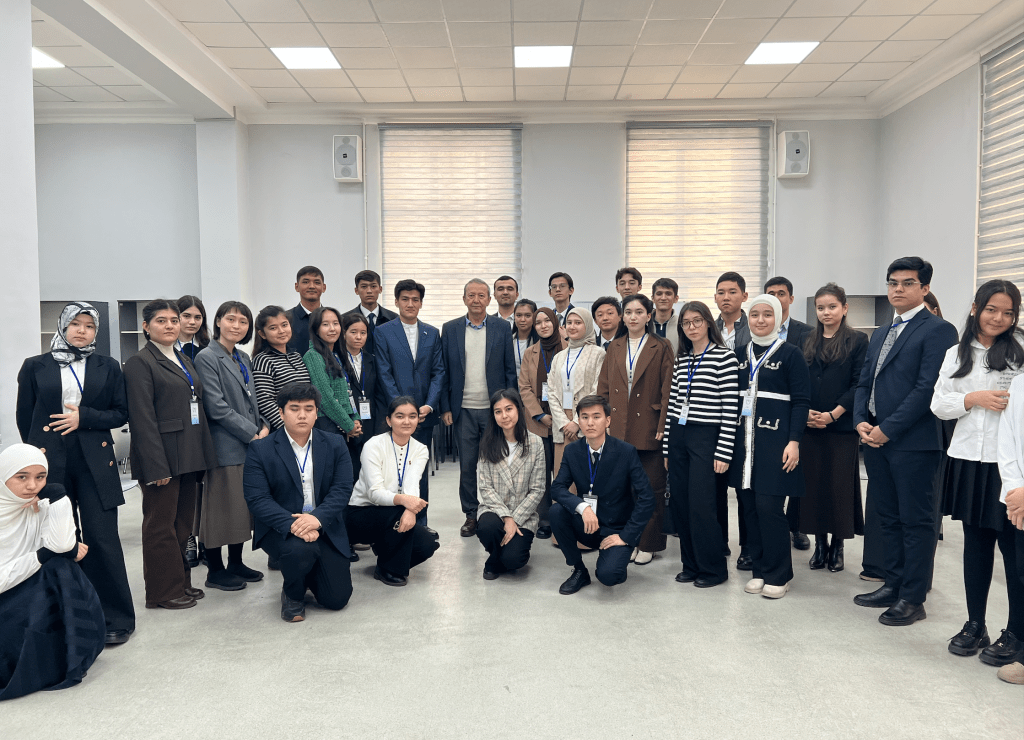
Yesterday, I had the privilege of conducting “Strategic Thinking in Action” workshop for Model UN participants at the University of World Economy and Diplomacy (UWED). The group brought together students from universities across Uzbekistan, along with international participants. I was impressed by the participants’ excellent command of English and their high level of engagement throughout the workshop.

#StrategicThinking #ModelUN #UWED #Leadership #Education #Diplomacy #Uzbekistan #YouthEmpowerment

Silence Is Golden

There lived a teacher known as a wise man, someone who was said to have reached great understanding. He had many disciples, each working hard, hoping for a single word of insight. But the teacher never spoke at all. He simply sat with them in silence, and this only sharpened their expectations.

None of them questioned his method. They thought doing so would show ignorance. They remembered the saying: “Speech is silver, silence is golden,” and many believed that truth reveals itself only in silence.

One day a disciple reached his limit and asked: “Master, may I ask why we are always silent?”

The others stiffened. They expected anger, maybe a rebuke for ingratitude or foolishness.

The teacher said nothing. He only smiled. To the poor disciple it seemed the teacher glanced toward the door, as if hinting he should leave. Flushed, the student stood up and left the school forever.

The rest lowered their eyes. Some wanted to ask something but stayed silent. Others decided never to ask anything at all.

Years passed. The teacher died in old age without uttering a single word. Only after his death did the disciples discover the truth, written in his old notebook: “I keep silence because my tongue was never loyal to the truth.”

Moral: silence is golden only when the tongue is worthy of speech.

First published on my Substack: https://alisherfaizullaev.substack.com/p/silence-is-golden

#Wisdom #Truth #Teaching #Sage #Master

Achievement vs Accomplishment

A concert pianist stands alone in an empty hall at dawn. No audience, no judges, no cameras. Just her and the Steinway, its black surface catching the first threads of light through tall windows.

She plays a familiar Chopin nocturne – one she’s performed hundreds of times. But this morning, something shifts. The music finally sounds like her own voice. Not her teacher’s carefully calibrated interpretation. Not the conservatory’s crystalline ideal. Hers. Raw, imperfect, alive.

She finishes in silence. Her hands rest on the keys. Outside, a bird calls. For the first time in years, she feels complete.

Three years earlier, she won the Van Cliburn Competition. Her photo appeared in The New York Times. The prize launched an international career: concert halls, recording contracts, a teaching position at Juilliard. That was achievement. The world saw it, measured it, celebrated it.

But this morning’s private revelation? This was accomplishment.

The societies we live in have become remarkably sophisticated at measuring achievement. From standardized test scores to job titles, from social media follower counts to awards ceremonies, we track success with algorithmic precision. Those who achieve more are celebrated, profiled, studied. Those who fall behind often struggle with shame, depression, or a particular modern affliction: invisibility.

Achievement has become our dominant language for human worth.

Yet there exists another, quieter dimension of success – one that rarely trends on social media or appears in year-end rankings. No medal commemorates it. No salary increase reflects it. Accomplishment is the internal sense that something meaningful has been completed, that you have grown into a fuller version of yourself, that your effort connected with something true.

The distinction matters because we increasingly confuse one for the other, often at significant psychological cost.

The Achievement Trap

Achievement is inherently comparative. It requires an external standard: a competition won, a promotion earned, a milestone reached that others can verify and applaud. The leaderboard, the rankings, the hierarchy – these are achievement’s natural habitat.

The achievement ideology dominates in many modern societies, particularly in competitive economies. Walk through any elite university and you’ll see it: students optimizing every hour, building resumes that read like corporate portfolios by age twenty. Even artists and writers – people whose work demands thinking outside boxes – find themselves measuring citations, prize nominations, gallery representations.

This isn’t entirely wrong. Achievements open doors. They validate years of effort. They create tangible good in the world. A Nobel Prize in science supports scholarship and advances human knowledge. An Olympic gold medal can inspire millions to pursue excellence. Even reaching ten thousand steps a day marks something worth celebrating.

Achievement has real value.

But achievement is also precarious. It depends on maintaining your position relative to others, on continued external validation. Research in social psychology has long documented how external rewards can undermine intrinsic motivation – a phenomenon known as the overjustification effect. When preschoolers who love drawing are given gold stars for their artwork, many lose interest in drawing when the stars stop coming. The external reward replaces the internal joy.

Scale this up to adult life, and you see the trap. When our sense of worth becomes primarily tethered to achievements, we become vulnerable. What happens when the achievements stop coming? When younger competitors surpass us? When the industry changes and our expertise becomes obsolete? When illness or circumstance interrupts our climb?

I’ve known executives whose entire identities centered on corporate success. Corner offices, strategic decisions, rooms that fell silent when they spoke. Then retirement arrived. No more meetings. No more quarterly targets. No more validation from the marketplace. For some, it felt like free fall. One man told me, with startling honesty: “I looked in the mirror and didn’t recognize who was looking back. Without the title, I didn’t know who I was.”

This isn’t merely an individual problem. A society that overvalues achievement breeds chronic anxiety, status competition, impostor syndrome, and what researchers call “contingent self-worth”- the fragile sense that you’re only as good as your last accomplishment. When external verification becomes the primary measure of success, those who cannot compete – due to illness, circumstance, disability, or simply different values – risk becoming invisible or worse, feeling worthless.

The achievement treadmill has no natural stopping point. There’s always another milestone, another competitor, another metric to optimize. It’s exhausting. And increasingly, people are realizing: even when you win, something feels hollow.

The Substance of Accomplishment

Accomplishment operates on different terrain entirely.

Consider a middle school teacher in Cleveland. She’s worked for fifteen years with students others have written off. No awards. Modest salary. Last week, a former student – now a college sophomore – sent her a letter. He’d been failing her class, angry, shut down. She’d kept showing up for him, kept believing something was there beneath the anger. The letter thanked her. Said she’d changed his life. Said he was studying to become a teacher himself.

She cried reading it. Not because it would advance her career or appear on her performance review. She cried because something real had happened, something that mattered deeply, something she could feel in her bones was true.

That’s accomplishment.

Or consider the writer who spent three years on a novel that never found a publisher. Commercial failure by any measure. But in writing it, she discovered her voice, learned to sustain complex narrative over hundreds of pages, pushed through doubt and paralysis, finished something she’d never believed she could finish. The manuscript sits in a drawer. Yet she knows, with quiet certainty, that those three years changed who she is.

Accomplishment is inwardly anchored. It doesn’t ask, “How do I compare with others?” It asks, “Did I grow? Did I do what mattered? Did I meet the challenge I set for myself, regardless of whether anyone noticed?”

It’s measured not by external standards but by internal integrity and significance. Accomplishment and fulfillment are two sides of the same coin: the sense of self-realization, of being in tune with your nature, of becoming more fully yourself.

But let’s be clear: accomplishment isn’t mere self-satisfaction or complacency. Real accomplishment requires effort, risk, growth. The pianist’s breakthrough came after thousands of hours of practice. The teacher’s impact emerged from years of patient, difficult work. Accomplishment isn’t cheap – it’s just differently valued.

Crucially, accomplishment and achievement aren’t opposites. They often intertwine, support each other, dance together. The pianist’s competition prize provided resources and confidence that eventually allowed for her private breakthrough. The teacher’s modest salary enabled her to keep showing up. Achievement can create conditions for accomplishment. And accomplishment – that deep sense of meaningful work – often fuels the sustained effort that leads to achievement.

The healthiest lives contain both. The danger lies in pursuing only externally validated achievement while neglecting internally grounded accomplishment. Or worse: mistaking one for the other entirely, believing that because you’ve achieved much, you’ve accomplished something meaningful.

Rebalancing Success

Walk into any co-working space in San Francisco or New York, and you’ll hear a particular vocabulary: crushing it, killing it, disrupting industries, changing the world. The language of achievement saturates everything. LinkedIn profiles read like highlight reels. Everyone’s winning all the time.

Except they’re not. Behind the performance, many people feel hollowed out.

How do we rebalance? How do we value both dimensions of success without abandoning standards or embracing complacency?

We might start by recognizing that humans aren’t wired for constant achievement. We’re not machines optimizing toward infinite growth. We’re organic beings with rhythms: effort and rest, challenge and contemplation, expansion and consolidation. Traditional societies understood this. Harvest seasons and fallow periods. Feast days and fast days. The body requires rest; so does the soul.

Modern achievement culture denies these rhythms. It demands perpetual striving, constant optimization, unending productivity. No wonder we’re exhausted.

Rebalancing also requires examining the questions we habitually ask. “What have you achieved?” dominates job interviews, first dates, family gatherings. It’s the default inquiry. What if we also asked: “What have you done that felt meaningful, regardless of recognition?” “What became possible because of your efforts?” “What did you learn about yourself this year?”

These questions redirect attention from comparative status toward personal growth and authentic contribution. They make room for different kinds of success stories.

For parents and educators, this rebalancing is particularly crucial. Children who grow up believing their worth depends entirely on measurable achievements often become adults who cannot appreciate anything that doesn’t come with external validation. They struggle to find joy in process, to value growth for its own sake, to recognize accomplishment when it arrives quietly.

Teaching young people to recognize their own growth – to feel genuinely accomplished when they’ve worked hard at something difficult, regardless of how it measures against others – may be one of the most important gifts we can offer. This doesn’t mean eliminating standards or pretending everything deserves a participation trophy. It means expanding our definition of what counts as success, making room for internal development alongside external metrics.

Leaders, too, can foster environments where internal growth matters as much as external results. Some companies are experimenting with this: creating space for reflection, celebrating learning from failure, measuring impact beyond quarterly earnings. It’s difficult, countercultural work. But necessary.

Perhaps the deepest difference between achievement and accomplishment lies in what happens when external rewards stop coming. And eventually, for all of us, they do.

Careers end. Awards become memories. Even the most impressive achievements fade into history. That gold medal gets stored in a box. The corner office is reassigned. The bestseller list moves on.

But accomplishment – the sense that you’ve lived with integrity, grown into your fullest self, contributed something meaningful – that remains. It becomes part of who you are rather than simply what you’ve done. It’s the difference between having a trophy and being transformed.

Cultivating Accomplishment

So how do we cultivate this quieter success? How do we develop the capacity to recognize accomplishment when achievement culture screams for our attention?

Start with attention itself. Take ten minutes – now, or later today. Journal about a time when you felt deep personal growth or completion, unrelated to external recognition. Maybe you resolved a conflict through honest conversation. Maybe you mastered a small skill – cooking a challenging recipe, fixing something broken – just for the satisfaction of it. Maybe you stayed present with someone in pain when you couldn’t fix their problem.

Write about it. What did you learn about yourself? What made this moment meaningful, even if no one else noticed? How did it change you?

These aren’t idle questions. They’re training wheels for a different way of seeing success. The more you practice recognizing accomplishment, the more visible it becomes. You start noticing it everywhere: in small acts of integrity, in moments of genuine connection, in the quiet persistence that changes nothing externally but everything internally.

You might also experiment with “accomplishment audits.” Once a month, before reviewing achievements (promotions, metrics, milestones), first ask: What did I complete that felt meaningful? What internal growth occurred? What became possible in my relationships, my understanding, my character?

This isn’t navel-gazing. It’s calibration. It’s learning to see what our achievement-obsessed culture renders invisible.

What Remains

When achievement ends, what remains?

That’s not a rhetorical question. It’s the question that reveals what success actually means to you.

Have I become someone I respect? Have I lived in a way that feels true? Have I touched lives in ways that mattered, even if no one kept score? Have I grown into a fuller version of who I might become?

These questions don’t appear on performance reviews. They won’t trend on Twitter. But they might be the most important questions we ever ask.

Achievement builds reputation. Accomplishment builds character.

One is about winning. The other is about becoming.

One depends on the audience. The other depends on the mirror.

One asks, “What did I get?” The other asks, “Who am I?”

We need both. A life without achievement may lack impact, resources, or recognition necessary to do meaningful work in the world. But a life without accomplishment – no matter how many trophies line the shelf – risks feeling empty at its core.

In a culture increasingly obsessed with the first, perhaps it’s the second that most deserves our attention now. Not because achievement doesn’t matter, but because we’ve forgotten there’s another kind of success entirely – one that doesn’t require applause, that can’t be ranked, that exists in the quiet satisfaction of knowing you’ve grown into someone you weren’t before.

The pianist in the empty hall knows both kinds of success. She has her prizes. They opened doors, validated sacrifice, proved something to the world.

But that morning alone with Chopin? That was hers. That was real. That was the kind of success that will remain long after the applause fades.

That’s accomplishment. And it might be the success we need most.

First published on my Substack: https://alisherfaizullaev.substack.com/p/achievement-vs-accomplishment

What’s the Point?

There once lived a village sage who mostly kept silent. The villagers expected revelations from him, but he never hurried. Years passed, the sage grew very old, yet he still made no move to enlighten anyone. By the end of his life, he stopped speaking altogether.

When the moment came and he felt he was leaving this world, many people gathered around him. Even visitors from neighboring villages arrived. Everyone hoped that before dying he might finally say something truly important.

Indeed, right before his final breath, the old man looked around and slightly opened his mouth. The crowd fell silent.

You can read the full story in my Substack: https://alisherfaizullaev.substack.com/p/whats-the-point

The 28-Points Peace Initiative and the SNT Method

The emerging 28-points peace initiative functions as a public version of a Single Negotiating Text (SNT), a mediation technique. One of the most consequential applications of this method took place at Camp David in 1978, when U.S. President Jimmy Carter mediated between Egyptian President Anwar Sadat and Israeli Prime Minister Menachem Begin.

In any SNT process, placing a structured framework on the table in advance means the mediator is not merely facilitating discussion but shaping and largely controlling the negotiation space before the parties even sit down. That is the central strength of the SNT approach.

At Camp David, Carter used a confidential SNT and continually refined it through 23 iterations until agreement became possible. A related logic appeared in the 1982–83 “Walk in the Woods” episode, where U.S. negotiator Paul Nitze and Soviet negotiator Yuli Kvitsinsky stepped outside rigid formal positions on nuclear negotiations to craft an intermediate proposal that neither side could publicly initiate but both could evaluate.

The difference now is the public nature of the text. Once an SNT becomes visible, every actor evaluates it through domestic pressures and strategic narratives. Even so, the architecture matters. Although the distribution of incentives in the text appears uneven, the 28-points framework introduces linkages and options that neither side could realistically table publicly. What follows remains to be seen.

#SNT #negotiation #mediation