A conversation with Dr. Corneliu Bjola, a Professor of Digital Diplomacy at the University of Oxford, on my YouTube channel “Diplomatic Nexus”: https://youtube.com/watch?v=lU5e9TBNrx4… #diplomacy #digitaldiplomacy #AI

Scholar–practitioner, author, educator, and former ambassador
A conversation with Dr. Corneliu Bjola, a Professor of Digital Diplomacy at the University of Oxford, on my YouTube channel “Diplomatic Nexus”: https://youtube.com/watch?v=lU5e9TBNrx4… #diplomacy #digitaldiplomacy #AI
Excited to share my latest YouTube “Diplomatic Nexus” interview with Prof. Dr. Marcus Holmes from the College of William & Mary, Virginia. We discussed diplomacy through the lens of political psychology and neuroscience.

People often say that it’s best to do what you love. Many believe this is the path to success, assuming that deep immersion in an interesting field contributes to achieving outstanding results. In contrast, work that doesn’t inspire interest can quickly become tedious, making significant achievements difficult.
Such reasoning has merit but is not always true. For example, I might enjoy singing or playing the piano, but without natural abilities, it’s unlikely to reach a high level of mastery. The world is full of interesting activities, but not all of them can help a person realize their potential and achieve success.
A more reliable path to professional self-realization and satisfaction is to focus on what you’re genuinely good at. When you excel in a particular area and it comes relatively easily to you, there’s a high probability that over time you’ll grow to love this type of activity and derive pleasure from it. Of course, this isn’t an absolute rule, but in most cases, this is exactly how it happens.
Therefore, an effective way to find your calling is to carefully examine your natural talents and inclinations. Concentrate on what you do best, develop these skills, and then both genuine interest and professional success will follow.
Comparing yourself to others can sometimes bring joy or consolation when you discover that you excel in something. However, more often it leads to disappointment and frustration. There will always be those who have achieved more, who are richer, more attractive, or luckier than you, who are less sick and whose lives seem to be going better. Unfair? Possibly. But the world is full of injustice, regardless of whether we want it or not.
Every person is unique. It’s better to find yourself and your path in life, understand your nature, and realize your own potential. In other words, maximize what you can achieve without looking at the achievements or shortcomings of others. For some, the path to greatness or accomplishment lies through music or politics, while another may find happiness in the work of a rural teacher or running their own restaurant. Of course, everyone can compare themselves to themselves: to who they were yesterday, a year or ten years ago, or to who they see themselves in fifteen years, or to their ideal “Self”. This can turn out to be a useful exercise. At the same time, such comparisons also have certain drawbacks, because a person is constantly changing and is never exactly who they were before.

Nasreddin Afandi, or Hodja Nasreddin, is not just a folk comic figure, but a sage who can teach us many things. Now, while teaching a course on strategic thinking and interaction at the University of World Economy and Diplomacy (UWED) and reflecting on the issues of morality and cunning in the context of strategy, I have rediscovered Afandi. Now he appears to me as a strategist, a person with deep strategic thinking. Of course, he is not a military or political strategist, but he is a great strategist in everyday life, a social strategist.
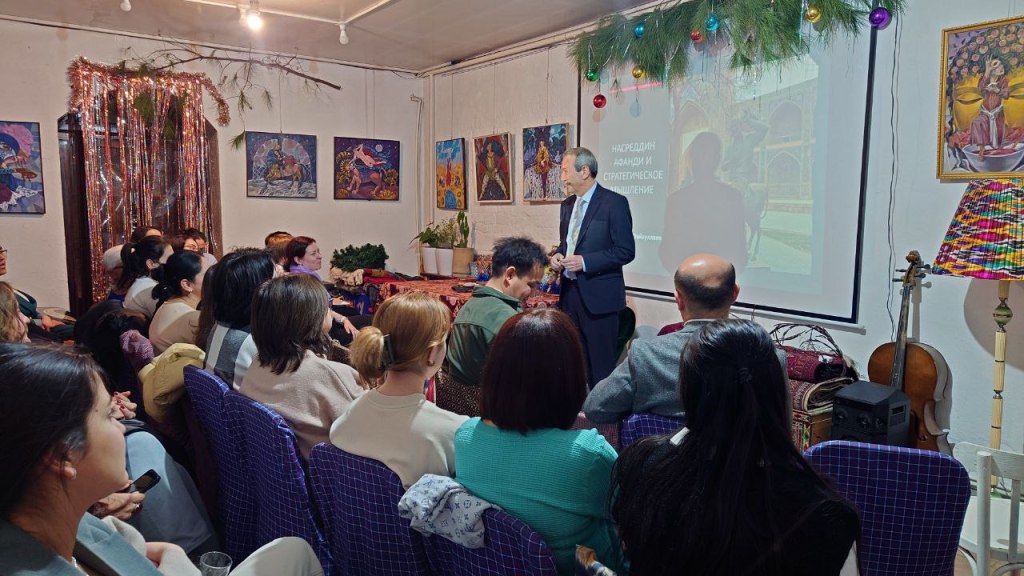
I recently gave an open lecture on Afandi as a strategist at UWED. After that, I received several invitations to give the same talk in some other places. So, a couple of days ago, I gave a new public talk at Human House in Tashkent titled “Nasreddin Afandi and Strategic Thinking.” There was a great audience, we analyzed various stories about Afandi from the point of view of strategic thinking, the use of humor and resourcefulness as strategic tools, even did some exercises, and, of course, laughed a lot.
Photos: During my recent talk at Human House about Nasreddin Afandi and strategic thinking.

I have been teaching and conducting various training sessions for a long time. I have a clear understanding of who I especially enjoy working with. In training workshops, these are primarily entrepreneurs, leaders and managers around 30-35 years old. On one hand, they have already gained experience and achieved certain successes, but on the other hand, they still maintain a strong desire to grow and reach new heights. In teaching, these are primarily motivated and curious students. When students are motivated and eager to learn, teaching becomes a pleasure. But if students lack the motivation to study, teaching becomes a real challenge, almost torment.

Mobile phones are the worst enemies of teachers, the learning process, and even the students themselves in the classroom. I would hang a drawing like this in the classrooms to discourage students from reaching for their mobile #phones. Or better yet, ban them from the classrooms.

My upcoming public lecture “Nasreddin Afandi (Khodja Nasreddin) and Strategic Thinking.”

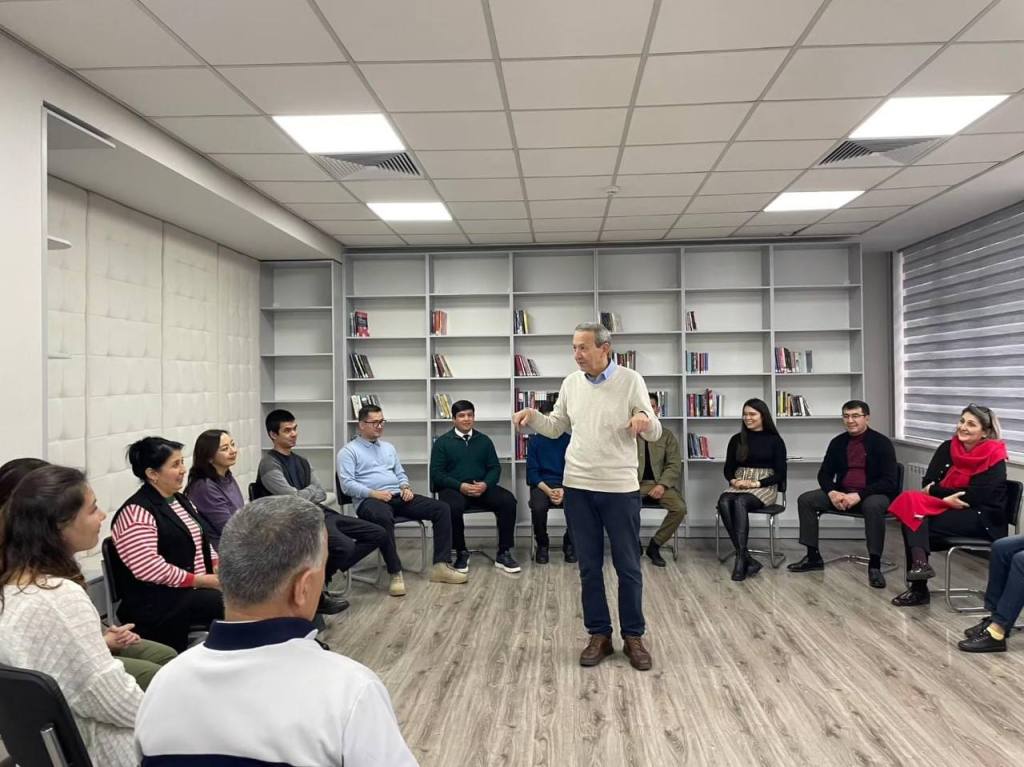
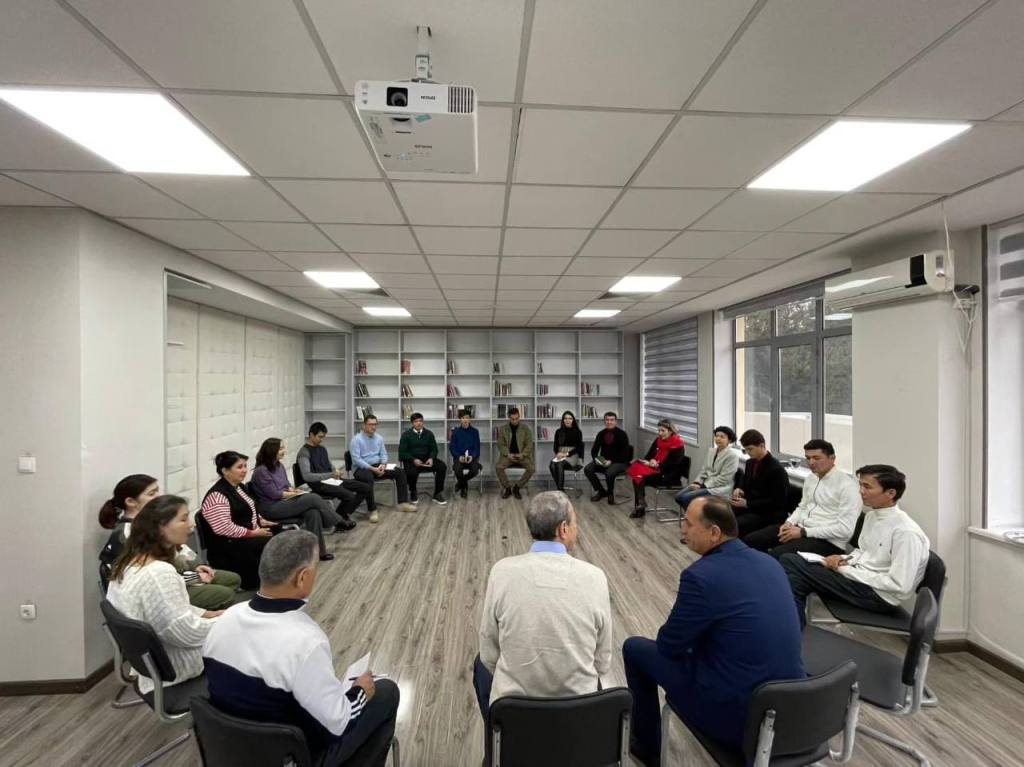
Conducted two training workshops (“Teamwork and Leadership Skills” and “Effective Negotiation”) at the Uzbek-Japan Innovation Center of Youth in Tashkent. It’s nice to receive such a good feedback:

Please find attached my photos.
 Alisher Faizullaev