Once I wrote a text and asked AI to edit it. AI returned a blank page. I thought: something is wrong. A technical malfunction? Machine overheating? Who knows.
I asked again. Silence. A little later—a new blank page.
What is going on? All right. Tomorrow.
The first thing I did the next morning was reread my text. It wasn’t perfect. There were rough spots. But it had something genuine. In fact, I liked it.
After thinking for a moment, I opened AI again and… quietly thanked it for not editing my text.
Walking is thinking. Sometimes subtle, sometimes explicit. By walking we change not only our location but the sequence of our thoughts. Ancient Greek Peripatetics knew this well. Modern students are sitting in the class, in the Athenian Lyceum Aristotle conducted his classes while walking on the covered walkways (peripatoi). I am sure, that nicely affected the discussion dynamics.
Walking is observing. People who mostly live online might feel as though they are on an unfamiliar planet with streets, trees, and plants where they might encounter other beings just like themselves. Fantastic!
Walking is breathing. Yes, imagine, that we are breathing all the time. Who would have thought? There are so many other important things we are engaged with. But walking can gently remind us that we are breathing beings. Homo Breathing. And, as it turns out, that is so interesting and fascinating.
To breathe deeply — so that not only we, but also our planet, could breathe. And she could walk on.
We think waiting is wasted time. Yet much of life is waiting. We wait to finish school. Then wait for a job, or a degree. Then wait for a wedding, children, a promotion. We wait for retirement, wait for our health to improve. Then wait for something else — something we don’t quite know.
Maybe we wait when our afterlife destiny is decided — hell or paradise. Perhaps waiting continues there too.
So, no reason to be impatient in a queue, or on a waiting list. There will always be more waiting ahead.
Certainty gives us a sense of safety. That is nice. But certainty is boring. Imagine reading a novel when you already know every page. Hm.
Uncertainty is different. It can produce anxiety. But it may also bring something that makes life interesting, intriguing. Surprise, discovery, and, finally, excitement and delight.
Imagine that you are writing a thrilling novel and, at the same time, you are the central character in it. Who is driving the plot — the writer or the character?
Imagine what can happen tomorrow. Do you know? Of course, you may know something, I believe. But still, uncertainty prevails.
I am pleased to begin a new chapter in my professional life as Diplomatic Practice Coordinator at the University of Oxford, following a competitive selection process.
In this role, I will contribute to the Foundations of Diplomacy programme at the Department for Continuing Education through teaching, curriculum development, and the design and delivery of experiential learning. This includes diplomatic simulations, practical exercises, and educational visits that help connect academic study with the realities of diplomatic practice.
The appointment brings together several strands of my career—as a diplomat, scholar, and educator—and provides an opportunity to work with colleagues and students from around the world while continuing my academic engagement with the University of World Economy and Diplomacy in Tashkent.
I look forward to contributing to Oxford’s long tradition of excellence in education and to further developing my research and teaching on diplomacy, negotiation, and strategic interaction.
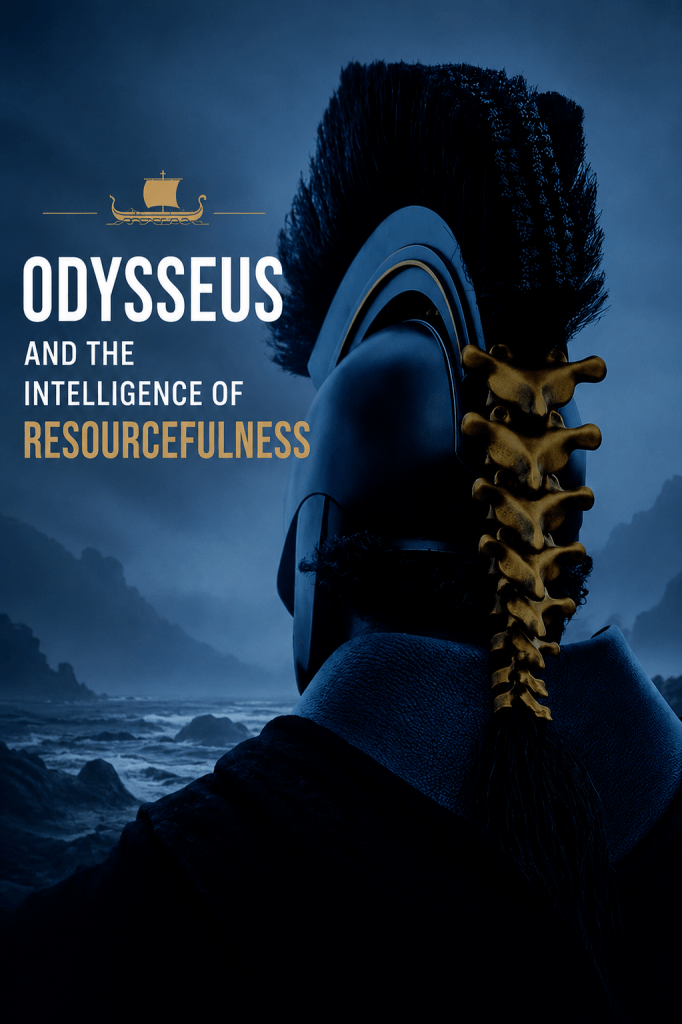
Christopher Nolan’s The Odyssey has revived interest in one of the oldest heroes of Western civilization. Viewers discuss the film’s scale, visual power, and interpretation of Homer’s epic. Watching it, however, I found myself reflecting on something else: what exactly made Odysseus extraordinary?
He is almost universally remembered as the cunning Odysseus. Yet I increasingly suspect that the resourceful Odysseus captures his character more accurately. The distinction matters.
Cunning is often associated with deception, clever tricks, or manipulation. Resourcefulness is something broader. It is a form of practical intelligence—the ability to understand a situation, adapt to changing circumstances, and discover workable solutions when conventional options have disappeared. Throughout the epic, this is precisely what Odysseus does.
Unable to defeat the Cyclops by force, he escapes through invention. Faced with the irresistible song of the Sirens, he refuses the false choice between surrender and avoidance. Instead, he creates a third solution: his companions block their ears while he is tied to the mast, allowing him to hear the song without destroying himself.
At its heart, resourcefulness is the ability to reject false dilemmas. This distinguishes Odysseus from many other epic heroes. Achilles represents physical excellence, courage, and glory in battle. Odysseus represents situational intelligence. His victories are rarely the product of superior strength. They emerge from perception, judgment, timing, adaptation, and imagination.
These qualities extend far beyond mythology. Diplomacy frequently rewards resourcefulness more than power. Negotiation often depends less on imposing one’s will than on discovering possibilities invisible to others. Leadership in uncertain environments rarely follows a manual; it requires interpreting situations for which no established solutions exist.
Perhaps this is one of the reasons why Odysseus still feels so modern. We live in an age where uncertainty has become the norm. Technological change, geopolitical instability, economic disruption, and social complexity constantly create situations for which no ready-made rules exist. In such circumstances, resourcefulness becomes one of the most valuable forms of intelligence.
Nolan’s film also reminds us that Odysseus is not simply a triumphant hero. He is a tragic figure. His intelligence never frees him completely from suffering. Nor is he an isolated individual shaping events entirely through his own will. His fate unfolds within a world governed by forces greater than himself—the gods of Greek mythology continually help, obstruct, reward, and punish him.
In that sense, Odysseus cannot be understood apart from the civilization that created him. He is a product of ancient Greece—its values, beliefs, and imagination. Yet he also transcends his own time. He has become one of humanity’s enduring archetypes: the person who confronts seemingly impossible situations not with superior force, but with ingenuity, judgment, and the determination to find a way forward.
That is precisely why every age rediscovers him differently. Every interpretation of Odysseus reflects the concerns of its own time. Some admire his courage. Others celebrate his cunning. Today, I suspect many of us are drawn to something else: his remarkable capacity to remain effective in a world of uncertainty.
Yet Nolan’s film also reminds us that resourcefulness is not the opposite of tragedy. Odysseus survives not because the world becomes less cruel, but because he continues to adapt to it. His intelligence does not spare him suffering; it enables him to endure it.
Perhaps this is why Odysseus remains so compelling. Shaped by the values of ancient Greece, the rivalries of the gods, and his own strengths and flaws, he continues to challenge every generation to reflect on the limits of human possibility—and on our capacity to discover a way forward when circumstances seem impossible.
Perhaps that is why Odysseus continues his journey—not only across the seas of Homer, but across the imagination of every new age.
The French expression savoir-faire is widely used but rarely examined. It is commonly translated as “knowing how to behave” or associated with good manners, elegance, social confidence, and polished conduct. While these qualities may reflect savoir-faire, they do not explain what it actually is.
At its core, savoir-faire is not about manners but about intelligence. More precisely, it is a form of practical intelligence exercised in social interaction. It is the ability to perceive a situation accurately, understand the people involved, adapt to changing circumstances, and act appropriately—often without relying on predetermined rules.
Most professional situations are not governed by manuals. Negotiations take unexpected turns. Meetings reveal hidden tensions. Relationships evolve. New opportunities emerge while others disappear. In such circumstances, success depends less on following procedures than on interpreting the situation correctly and responding with sound judgement.
Savoir-faire therefore begins not with behaviour but with perception. Before acting effectively, one must first understand what kind of situation one is facing. Who influences whom? What are the unspoken expectations? What matters to the participants? What is the appropriate degree of openness, firmness, patience, or flexibility? These questions are rarely answered explicitly, yet they shape every important interaction.
This understanding must then be translated into action. Here, adaptation and improvisation become essential. People with savoir-faire do not simply react to events; they adjust intelligently as situations unfold. They recognise opportunities where others see only obstacles, remain composed under uncertainty, and modify their approach without losing sight of their objectives.
In this sense, savoir-faire brings together several interrelated capacities: social perception, situational judgement, adaptive social intelligence, and skilful improvisation. These capacities are difficult to separate in practice. Together, they enable individuals to navigate complexity with confidence and effectiveness.
For diplomats, savoir-faire is not an optional refinement but a professional necessity. Diplomacy takes place in an environment characterised by cultural diversity, conflicting interests, ambiguity, and constant change. Diplomatic protocol provides an important framework, but protocol alone cannot resolve unforeseen situations. Communication techniques are useful, but they cannot determine when to speak, when to remain silent, when to compromise, or when to stand firm. Such decisions depend on judgement informed by savoir-faire.
The importance of savoir-faire, however, extends far beyond diplomacy. Negotiators, business leaders, physicians, lawyers, teachers, entrepreneurs, and public officials all operate in situations that require continuous interpretation and adaptation. Technical expertise may explain what should be done in principle. Savoir-faire determines how it can be accomplished successfully in practice.
Perhaps this also explains why savoir-faire is so difficult to teach. It cannot be acquired simply by learning rules or techniques. It develops through experience, observation, reflection, and repeated engagement with real situations. It grows as individuals learn not merely to apply knowledge but to understand contexts and respond intelligently to them.
In an age increasingly shaped by artificial intelligence and automation, savoir-faire reminds us that some of the most valuable human capabilities remain deeply situational. Information may be abundant, and analytical tools increasingly powerful, but the ability to understand people, exercise judgement, adapt creatively, and navigate complexity remains a distinctly human form of intelligence.
What makes an effective diplomatic representative? We often praise diplomats as “good” or “effective,” but effective in what sense? I have been developing a simple framework for reflecting on two dimensions of individual diplomatic representation: presentability and representability. The framework is intended to help analyse diplomats more systematically and to support diplomatic education, training and professional development.
Here is an early version of such a framework that can be tested in a classroom or training setting.
A FRAMEWORK FOR REFLECTING ON INDIVIDUAL DIPLOMATIC REPRESENTATION
Presentability is a diplomat’s capacity for effective social performance. It concerns how diplomats present themselves through their appearance, behaviour and interaction. It shapes first impressions, accessibility and influence.
Choose a diplomat (historical or contemporary) and reflect on the following dimensions:
□ 2 Fair Generally appropriate but often awkward, inconsistent or ineffective.
□ 3 Good Professional, culturally appropriate and able to establish constructive relationships.
□ 4 Very Good Projects confidence, adapts well across cultures and communicates persuasively.
□ 5 Outstanding Creates exceptional trust, respect and positive engagement across diverse audiences.
Representabilityis a diplomat’s recognized capacity to represent the country credibly and effectively. It combines competence, credibility, judgement and the authority associated with the representative role.
Choose a diplomat (historical or contemporary) and reflect on the following dimensions:
□ 1 Poor Lacks competence, credibility or authority.
□ 2 Fair Has basic competence but limited influence or credibility.
□ 3 Good Competent and generally trusted to represent national interests.
□ 4 Very Good Exercises sound judgement and significant diplomatic influence.
□ 5 Outstanding Represents the country with exceptional authority, credibility and strategic effectiveness.
Presentability concerns the social dimension of diplomacy — how diplomats appear, behave and interact with others. Representability concerns the strategic dimension of diplomacy — how diplomats think, judge and advance their country’s interests. Although the two are closely intertwined in practice, representability ultimately underpins durable diplomatic effectiveness, while presentability shapes access, trust and influence.
The practical refinement of presentability is smoothness — the capacity to conduct social interaction with ease, tact and influence. The practical refinement of representability is smartness — the capacity to exercise strategic judgement with competence, credibility and authority.
How could this framework be improved? Would you find it useful in diplomatic academies, foreign ministries or executive education?
For further reading: Faizullaev, Alisher. (2026). “Presentability and Representability: Rethinking Individual Diplomatic Representation”, The Hague Journal of Diplomacy (advance publication). DOI: https://doi.org/10.1163/1871191X-bja10232