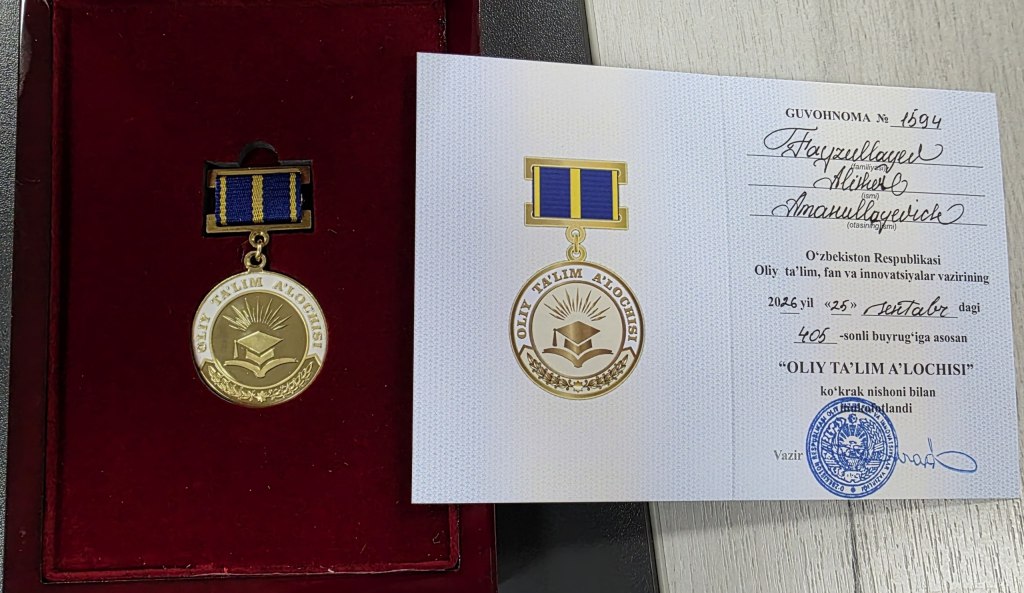
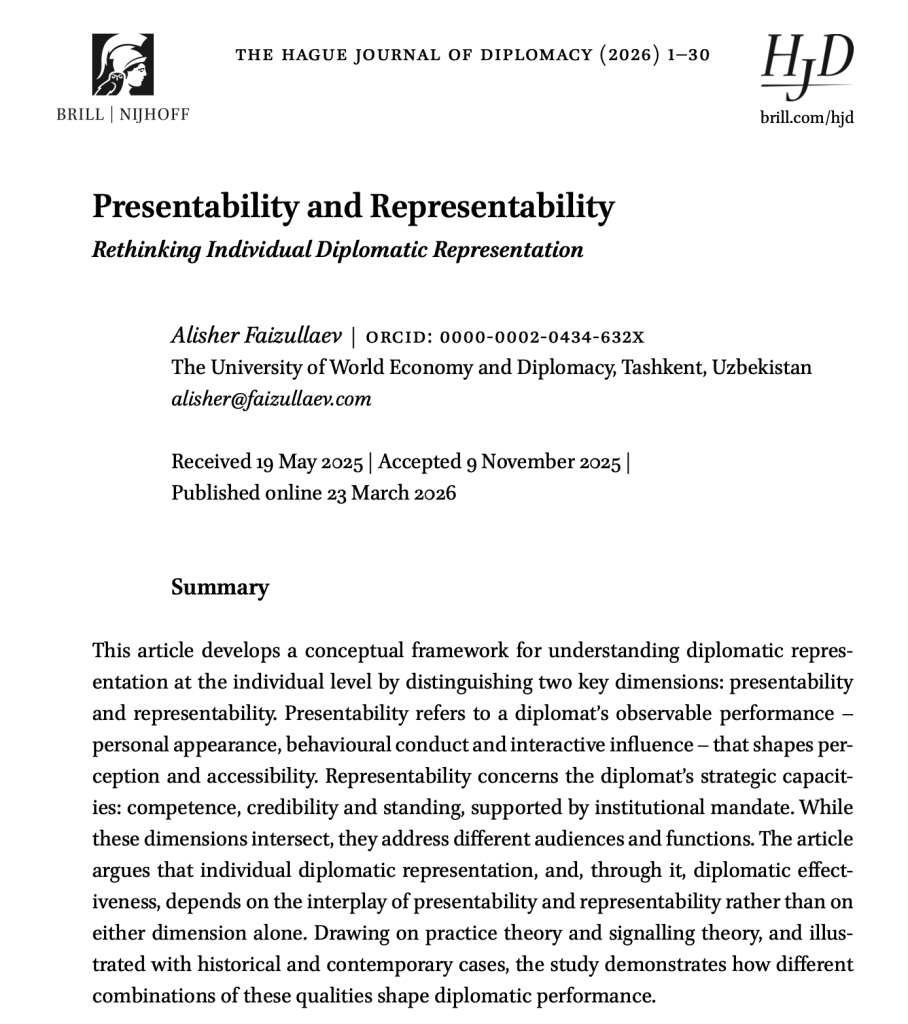
What makes an effective diplomatic representative? We often praise diplomats as “good” or “effective,” but effective in what sense? I have been developing a simple framework for reflecting on two dimensions of individual diplomatic representation: presentability and representability. The framework is intended to help analyse diplomats more systematically and to support diplomatic education, training and professional development.
Here is an early version of such a framework that can be tested in a classroom or training setting.
A FRAMEWORK FOR REFLECTING ON INDIVIDUAL DIPLOMATIC REPRESENTATION
Presentability is a diplomat’s capacity for effective social performance. It concerns how diplomats present themselves through their appearance, behaviour and interaction. It shapes first impressions, accessibility and influence.
Choose a diplomat (historical or contemporary) and reflect on the following dimensions:
□ 1 Poor
Creates negative impressions; appearance or behaviour undermines diplomatic effectiveness.
□ 2 Fair
Generally appropriate but often awkward, inconsistent or ineffective.
□ 3 Good
Professional, culturally appropriate and able to establish constructive relationships.
□ 4 Very Good
Projects confidence, adapts well across cultures and communicates persuasively.
□ 5 Outstanding
Creates exceptional trust, respect and positive engagement across diverse audiences.
Representabilityis a diplomat’s recognized capacity to represent the country credibly and effectively. It combines competence, credibility, judgement and the authority associated with the representative role.
Choose a diplomat (historical or contemporary) and reflect on the following dimensions:
□ 1 Poor
Lacks competence, credibility or authority.
□ 2 Fair
Has basic competence but limited influence or credibility.
□ 3 Good
Competent and generally trusted to represent national interests.
□ 4 Very Good
Exercises sound judgement and significant diplomatic influence.
□ 5 Outstanding
Represents the country with exceptional authority, credibility and strategic effectiveness.
Presentability concerns the social dimension of diplomacy — how diplomats appear, behave and interact with others. Representability concerns the strategic dimension of diplomacy — how diplomats think, judge and advance their country’s interests. Although the two are closely intertwined in practice, representability ultimately underpins durable diplomatic effectiveness, while presentability shapes access, trust and influence.
The practical refinement of presentability is smoothness — the capacity to conduct social interaction with ease, tact and influence. The practical refinement of representability is smartness — the capacity to exercise strategic judgement with competence, credibility and authority.
How could this framework be improved? Would you find it useful in diplomatic academies, foreign ministries or executive education?
For further reading: Faizullaev, Alisher. (2026). “Presentability and Representability: Rethinking Individual Diplomatic Representation”, The Hague Journal of Diplomacy (advance publication). DOI: https://doi.org/10.1163/1871191X-bja10232
#diplomacy #diplomat #presentability #representability #smoothness #smartness #representation